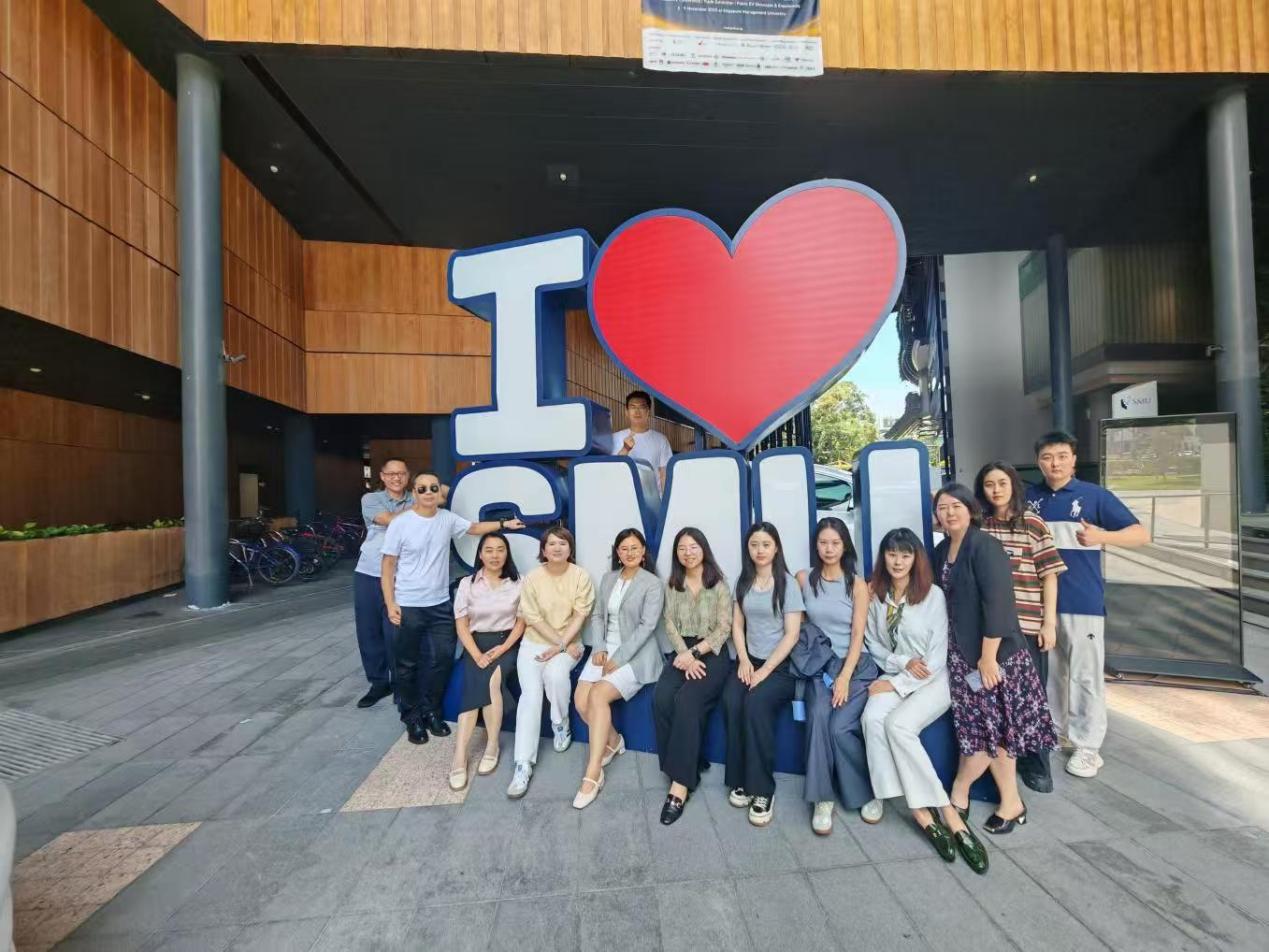
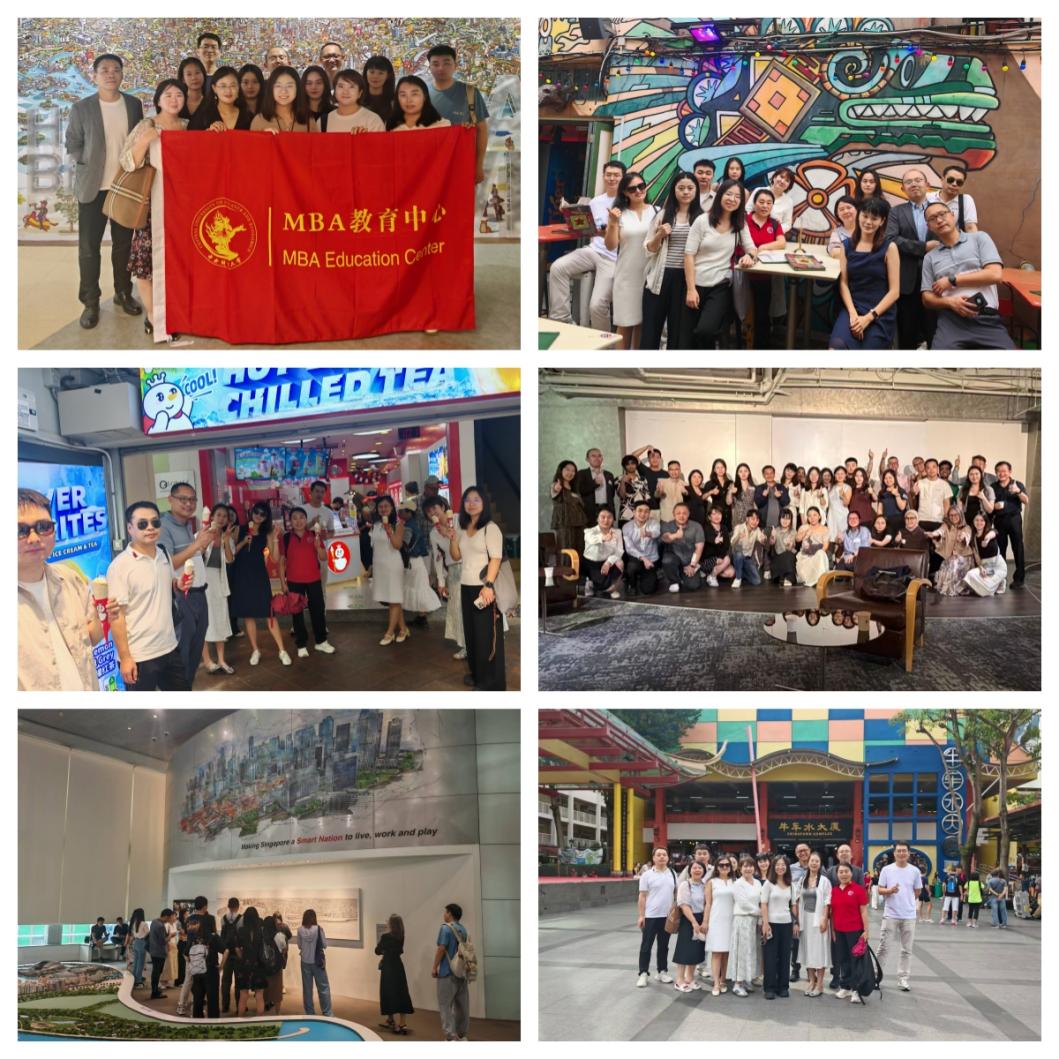
To thoroughly implement the spirits of the Fourth Plenary Session of the 20th Central Committee of the Communist Party of China and the National Education Conference, proactively advance the internationalization strategy of MBA education at the Central University of Finance and Economics (CUFE), and fulfill the mission of CUFE Business School—"Contribute new management knowledge and cultivate leaders with a global perspective, innovative spirit, and sense of social responsibility"—the GEMBA Program Team of CUEB, led by Gu Leilei, Vice Dean of CUFE Business School, and Dong Shuo, Counselor of the MBA Student Affairs Office, organized a nine-day in-depth study visit to Singapore from November 1 to 9, 2025. A total of 12 MBA students and alumni from CUFE MBA participated in this activity.
This themed study visit program, co-hosted with the Lee Kong Chian School of Business at Singapore Management University , is not merely an overseas course, but an immersive learning journey integrating four core dimensions: "Academic Enlightenment", "Practical Empowerment", "Cultural Integration" and "Platform Co-construction". It fully demonstrates the original aspiration and mission of the GEMBA program to cultivate global business leaders.
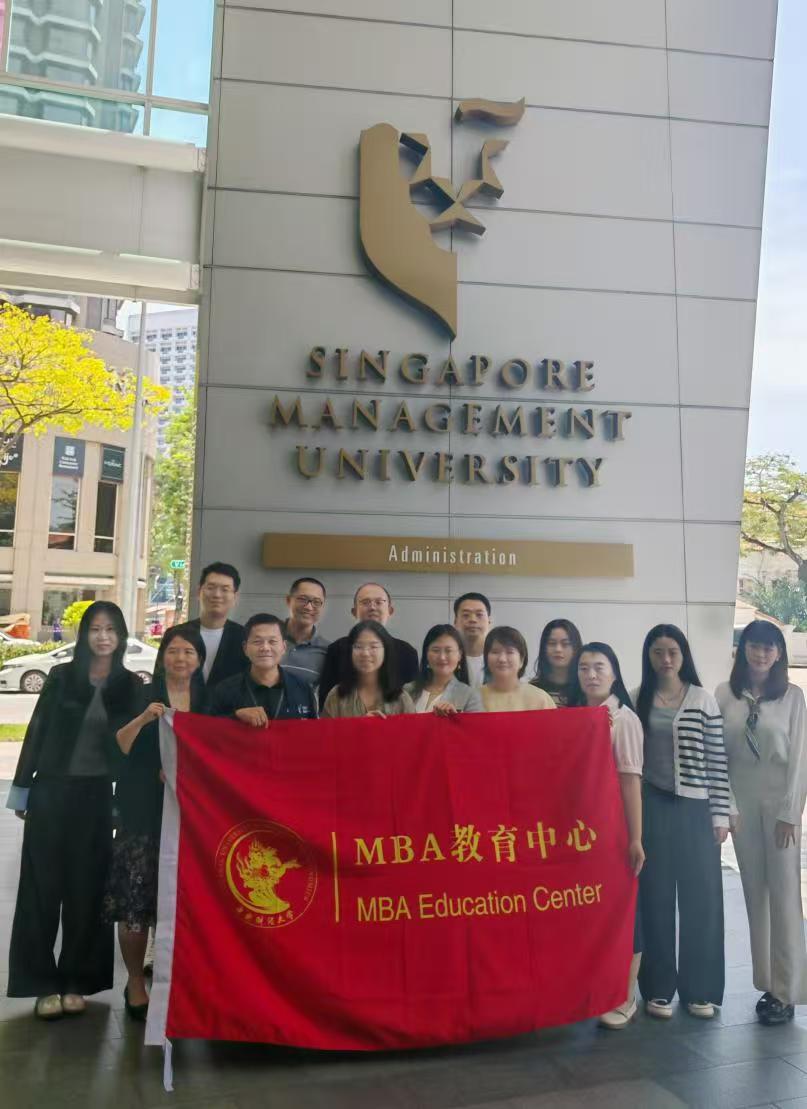
Academic Enlightenment: In the palace of critical thinking, participants develop forward-looking business insights
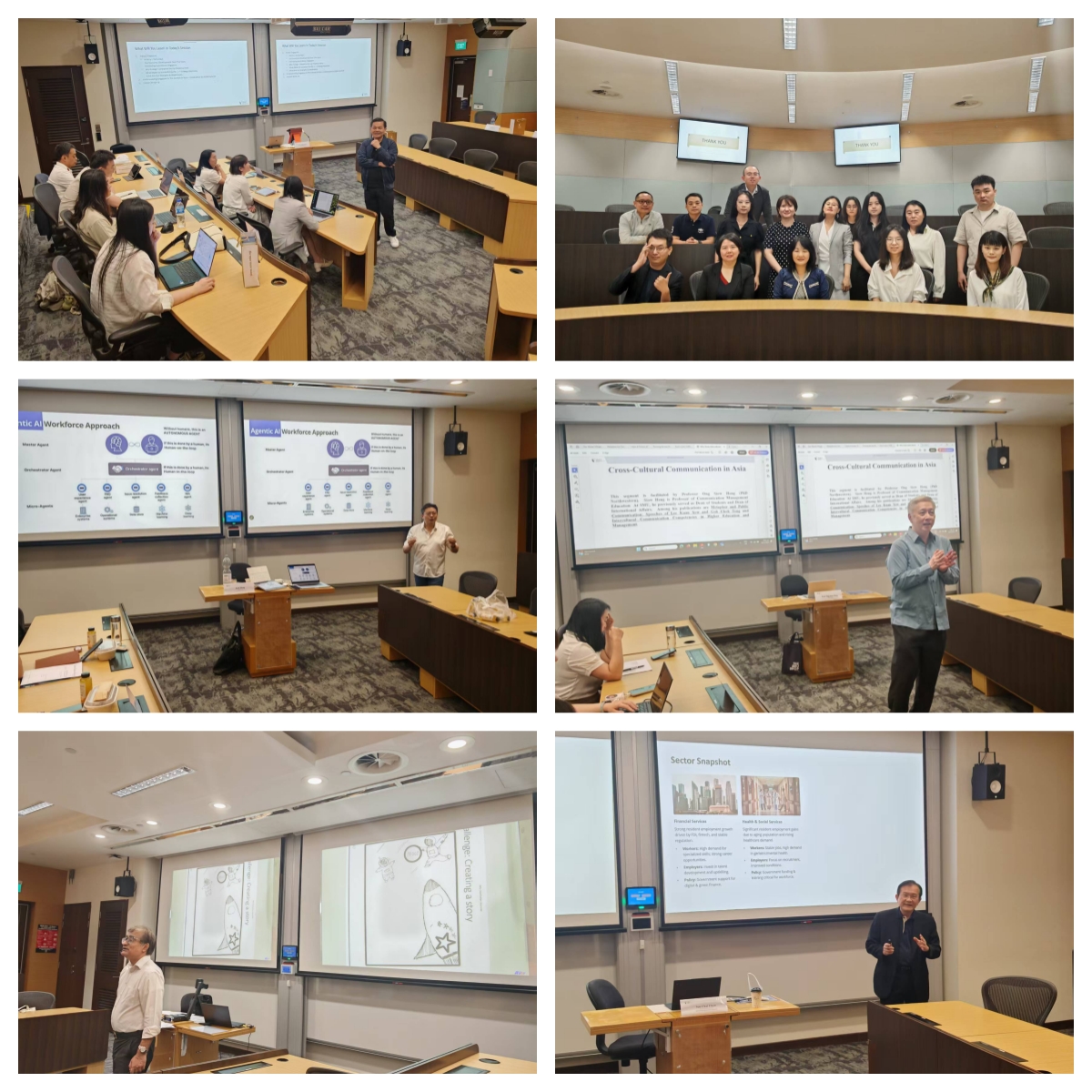
Six academic lectures of this themed study visit program at Singapore Management University were delivered by a group of full-time and adjunct professors from SMU's Lee Kong Chian School of Business . Inside the classrooms of SMU, the collision of ideas sparked brilliant sparks of wisdom.
Professor AngSerKeng did not merely state historical facts; instead, he vividly recounted Singapore's nation-building history and conducted an in-depth analysis of how the country has transformed its multicultural background into governance advantages and business centripetal force.
Professor OngSiowHeng's course "Cross-Cultural Communication in Asia" provided students with theoretical frameworks and practical tools for effective communication in a multicultural environment, as well as guidance on how to enhance global collaboration capabilities through such communication.
In her class "Asian Family Inheritance", Professor Mandy Tham delved into the complex challenges faced by Chinese family businesses during intergenerational transitions. The course not only covered governance issues such as inheritance planning, equity design, and the introduction of professional managers but also conducted an in-depth analysis of the decisive role of "soft" elements such as emotions, values, and social capital in the inheritance process.
Professor Shantanu Bhattacharya's course "Creativity in Southeast Asia" empowered students from a methodological perspective. Through a series of highly interactive design thinking workshops, he guided students to break free from inherent thinking patterns and learn how to systematically solve complex business problems through steps such as empathy, definition, ideation, prototyping, and testing.
When the topic shifted to cutting-edge technology, Professor Jack Hong painted a vivid picture of how AI technology is profoundly changing the economic landscape of the region in his lecture "Application of Artificial Intelligence in Southeast Asia". Through vivid cases in fields such as fintech, smart logistics, and precision agriculture, he demonstrated how technologies like machine learning and natural language processing help enterprises improve efficiency, optimize decision-making, and develop new business models.
Mr. Soo Chai Chew, a senior career consultant, gave a special lecture titled "Career Opportunities in Singapore and Southeast Asia". He provided practical suggestions for students to plan their career development paths in Southeast Asia, lighting a beacon for those aspiring to expand their careers overseas.
Practical Empowerment: In the Heart of the Lion City, Decoding Singapore's Password as Southeast Asia's Hub
Beyond the classroom, this study visit extends the learning scenario directly to the forefront of Singapore's business ecosystem. Following a clear path—from understanding the macro environment to personal and family overseas planning, then to practical corporate strategies, and finally touching on the core of local innovation—it delves deeper layer by layer.
The first stop of the visit was the China Enterprises Association (Singapore). At the seminar, Mr. Fu Xiaohui, Secretary-General, first systematically introduced the association's development as a bridge for economic and trade cooperation between China and Singapore. Subsequently, Ms. Huang Yanting, legal advisor of the association, accurately analyzed the legal structure, compliance key points and common risks of setting up a company in Singapore, providing the "first lesson" for enterprises to establish a presence locally. Mr. Du Guanru, Deputy Secretary-General, shared valuable experiences from practical cases in cross-border management, localized operations and partnership building of large-scale projects, fully presenting the successful model of Chinese enterprises rooted in Singapore and radiating Southeast Asia.
Subsequently, the participating teachers and students shifted their focus to the personal dimension of overseas development. They conducted in-depth discussions with Ms. Lu Zhuo, Head of Greater China Business Department of Advisors Alliance Group (a consulting firm under AIA Group), and Ms. Chen Siyun, Founder of Singapore Zeda, on how individuals and families should conduct global asset allocation and identity planning against the backdrop of corporate overseas expansion.
The visit to iFAST pushed the topic to the tactical level of corporate overseas expansion. Mr. Bernard Teo, Managing Director of iFAST, provided a macro interpretation of the trend of Chinese capital going global. Meanwhile, the sharing by Mr. Paddy Tan, Managing Partner of Black Storm Consulting, was more focused. He pinpointed the challenges Chinese enterprises face in marketing, team building and business localization after establishing a presence in Asia Pacific, and offered practical strategies for quickly launching businesses and seizing market opportunities.
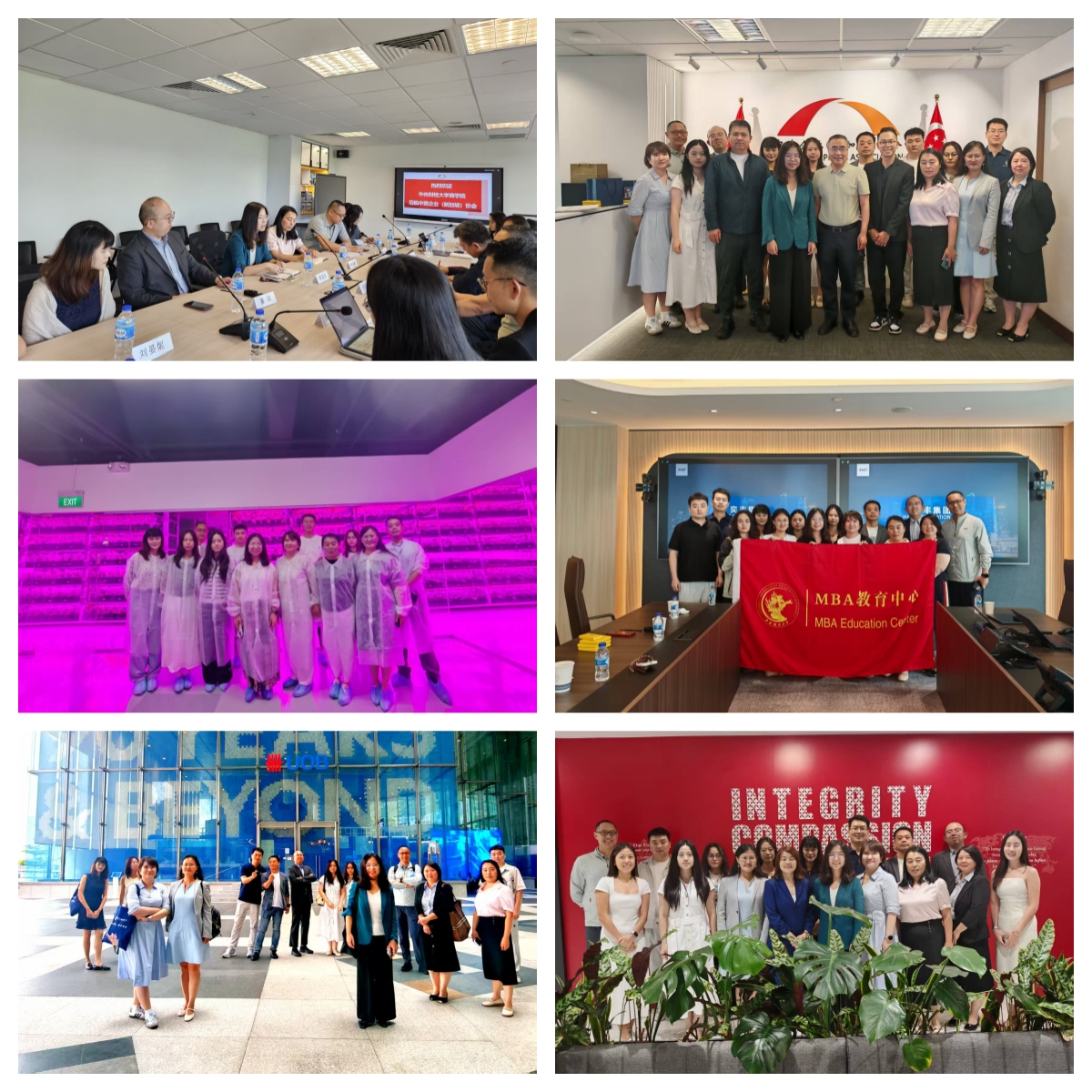
A touch of green in the itinerary came with the visit to GKE VegeMagic, an innovative agricultural enterprise. Teachers and students of the project team went deep into its vertical farm, learning firsthand how this local company leverages technology to develop a new business model with limited resources—demonstrating the outstanding innovation capability and execution of Singaporean enterprises.
Cultural Integration: Forging Global Leadership in a Diverse Context
The success of global business is deeply rooted in the understanding and respect for different cultures. Through multi-dimensional cultural immersion during this study visit, the abstract concept of "cross-cultural competence" has been transformed into the students' personal insights and experiences.
During the itinerary, teachers and students of the project team conducted on-the-spot experiences in cultural landmarks such as Chinatown and Little India. Amidst the bustling streets, ancient temples, and exotic markets, they intuitively felt the social texture of Singapore where diverse ethnic groups, religions, and cultures coexist and integrate harmoniously, thus establishing a vivid and three-dimensional understanding of the multicultural context in Southeast Asia.
The visit to the URA Gallery (Urban Redevelopment Authority Gallery) served as a pivotal point for understanding Singapore's development model. Singapore's urban planning has achieved an exquisite balance between development and inheritance, efficiency and inclusiveness, providing in-depth enlightenment for teachers and students to think about enterprises' global and localized strategies.
At the exchange dinner with teachers, students and alumni from Singapore Management University (SMU), the open and in-depth conversations ranged from Singapore's public housing policy to Beijing's entrepreneurial ecosystem, and from the digital payment landscape in Southeast Asia to China's live-streaming e-commerce model. Such ideological collisions in a relaxed atmosphere enabled teachers and students from both sides to build a valuable cross-border peer network, sowing the seeds for future transnational cooperation.
Platform Co-construction: Unveiling a New Chapter of Internationalization at the Nanyang Hub
This study visit has initially built a multi-dimensional international empowerment platform. The journey is not merely a learning and inspection experience, but also a new starting point for personal career development and the globalization of business undertakings.
"Network Platform" for Diversified Integration:The study visit has broken down traditional social barriers, bringing together academic authorities, industry leaders, and future peers. Based on shared learning experiences and in-depth ideological exchanges, all participants have established high-quality connections characterized by trust and mutual understanding.
"Service Platform" for Supporting Implementation:During the intensive visits and exchanges, teachers and students of the project have directly accessed a full-chain resource system covering personal overseas development and corporate global expansion. Ranging from financial support, strategic and market development guidance to potential partners in legal services, finance and taxation, and human resources, this system provides solid support for the entire process of international business initiatives from blueprint planning to implementation.
"Practice Platform" for Cooperative Upgrading:Taking this visit as an opportunity, CUFE Business School and the Lee Kong Chian School of Business of Singapore Management University have conducted in-depth discussions on cooperation in CEMBA and DBA programs as well as long-term study visit mechanisms. Additionally, cooperation intentions regarding student internships, corporate visits, and talent placement have been reached with a number of visited institutions.The establishment of this platform marks a significant transformation of the GEMBA program from a short-term project to a long-term ecosystem, which will continue to provide institutional guarantees for the global development of its participants.
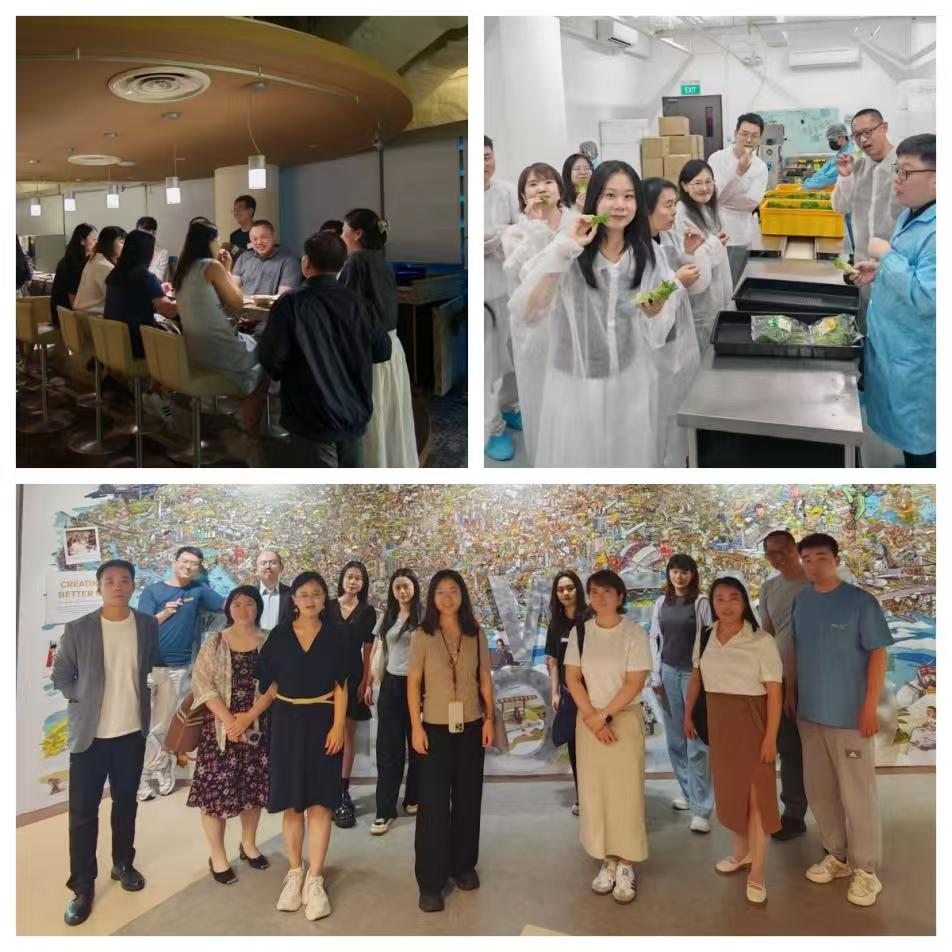
The nine-day trip was brief, yet its ripple effects continue to spread. Through this meticulously organized Singapore study tour, the CUFE MBA Education Center has successfully elevated an overseas learning journey into a strategic fulcrum for empowering students and alumni in their global careers. The internationalization advocated by the GEMBA program is not only about broadening horizons and updating knowledge, but also about precise resource connection and effective enlightenment of business actions. It will continue to assist students and their enterprises in forging ahead steadily and winning the future on the broad stage of global business.